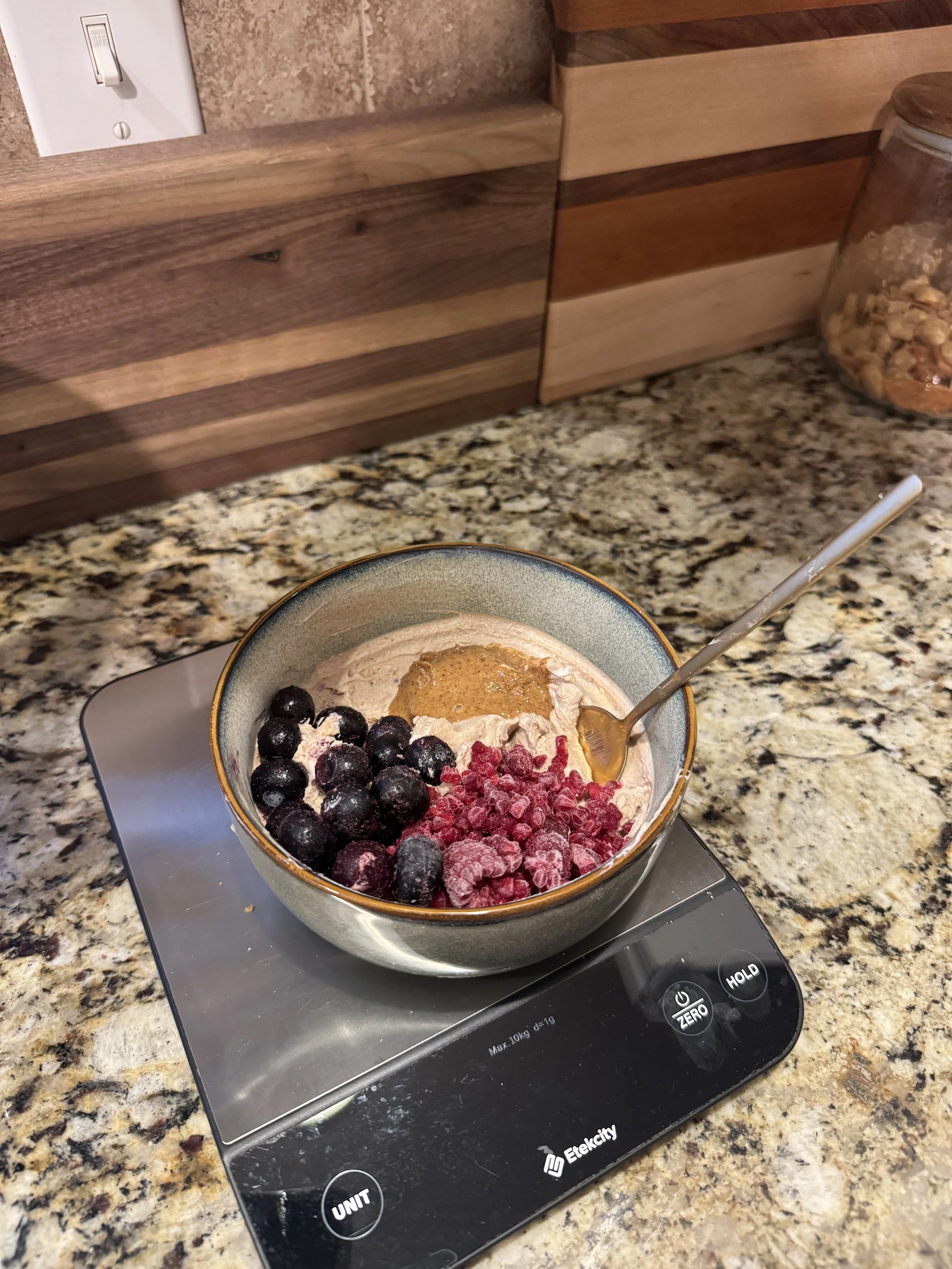
Tracking your food usually gets a bad rap. I've personally done it for months, and I've heard all the comments: "Isn't that obsessive?" or "You track your food… that's weird." But I see it very differently.
For me, tracking has been a game changer. It shows me what I'm doing well and where I have room to improve. To reach my fitness goals, I need to fuel my body with the right nutrients, and ENOUGH of them. Tracking has helped me find the gaps in my eating habits, and I feel SO much better after fixing them!
Why Is Tracking Useful?
Tracking is a great tool for awareness. Just like you wouldn't drive a car without a fuel gauge, it's hard to fuel your body well if you don't know what you're actually giving it.
It also shows you where you have room to play. Once you understand your macro needs and what's in the foods you eat, you can still enjoy the foods you love while working toward your goals.
And it doesn't have to be forever! It's a useful tool, especially when you're first getting started, and you can always come back to it if you need it.
How to Start Without Feeling Overwhelmed:
Pick one app and stick with it. There are lots of free and paid options, like MyFitnessPal, Cronometer, and MacroFactor. They're all pretty similar, so don’t overthink it.
Set your calorie targets. Most apps will ask for details like your height and weight to estimate your daily calorie needs. Keep in mind it's just an estimate and may need to be adjusted for you personally (reach out to me if you need help with this).
Start by just observing. For the first week or so, log what you normally eat as accurately as you can (don't change anything yet). This is like data gathering, not dieting, to show you what your current habits look like.
Keep it simple: track protein and calories first. Your calories are made up of three “macros” (protein, carbs, and fats), but you don't have to focus on all three right away. Start with a daily protein and total calorie goal.
Aim for accuracy, but don't stress over perfection. A food scale is the most accurate way to log portions (measuring cups can work too). But if you're just starting, estimates are okay. Your closest guess always beats not tracking at all, and you can get more accurate over time.
Set yourself up for success. Log meals ahead of time, save your frequent meals, and use barcode scanning to make logging simpler.
Use what you learn. Look for patterns, like where your protein is low or which meals are easiest to adjust, and make one change at a time. That way you progress at a pace you can actually maintain, AND learn what makes your body feel its best.
Give it time! A lot of people quit tracking after a few days because it feels odd, and then decide it "doesn't work." Like any new habit, it takes a little getting used to. But once logging becomes second nature and you start seeing results from the changes you make, it's SO worth it. Be patient with the process!
Need Help?
Tracking macros has made a huge difference in how I feel both in and outside of my workouts, and I'd love to help you get that same awareness.
Of course, anyone can track their macros on their own! But if you're ready to make a change and want guidance, support, and education along the way, that's what my 1:1 Nutrition Coaching is for. Whether your goal is weight loss or just feeling better in everyday life, we'll make a plan around YOU, so that it actually works on busy days too :)
Reach out today for a free consultation!
— Written by Logan Hurdle
